

Next Gen Makers exists to help solve the UK Engineering skills shortage. How we do this is unlike anything else…


We need to inspire more young people (and influencers) to perceive engineering as a positive career choice – then signpost them to take it

We need more engineering and manufacturing companies running successful apprenticeship schemes and early careers programmes that better attract and retain young talent
However, this is not guaranteed via the status quo…
Whilst the sector has made positive strides to change perceptions and recent polls suggest engineering is becoming a more attractive career choice for many young people, the number of young people entering the sector does not meet the volume required to bridge the skills gap – and dated misconceptions still exist.
Furthermore, recent government reports suggest that thousands of apprentices are quitting schemes in the UK every year due to a poor experience with their employer.
Given the acute attraction issues the sector faces, if there was an industry most vulnerable to the adverse effects of this, it is engineering & manufacturing.
2/5 Apprentices currently retained on average
Independent research by Next Gen Makers, of over 200 UK engineering and manufacturing firms of varying sizes, highlighted that on average, 2/5 apprentices were being retained (at any point between year one and the completion of end point assessment within an apprenticeship).This represents a 60% attrition rate.
Numbers such as these are problematic for two reasons:
Firstly, if extrapolated across the sector, apprenticeships will not generate enough new engineers to fill the national skills gap.
Secondly, our research also highlighted that the average sunk cost to an employer of a failed apprenticeship (i.e. where the learner leaves during or at completion of an apprenticeship) is between £80,000 and £300,000 depending on the level of time and effort invested in recruitment, onboarding, mentoring and ongoing training.
This represents a significant – and often disguised – cost for companies to bear.
In addition, negative experiences with running apprenticeship schemes risk putting employers off doing so in the future, potentially with limited acknowledgement and review of what led to the lack of initial success.


We are challenging the status quo head on by facilitating a movement that is uniting industry to drive positive change.
Our movement involves facilitating a national community of like-minded engineering & manufacturing firms to…


“Since being involved our apprenticeship scheme has improved and we are far more successful in finding and retaining good quality candidates. The Accreditation demonstrates that we have a quality scheme that will be of benefit to local school and college students”
Mark Capell, General Manager, LISI Aerospace
Latest news
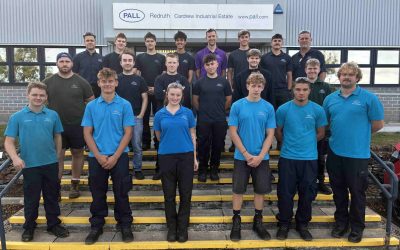
Pall Aerospace Redruth becomes the first Gold ‘Excellent Employer’ in Cornwall
Redruth based Pall Aerospace has become the first and only employer in Cornwall to hold the Gold ‘Excellent Employer’ status for the Next Gen Makers Engineering Apprenticeships: Employer Accreditation. Less than one point previously separated Pall Aerospace from the...
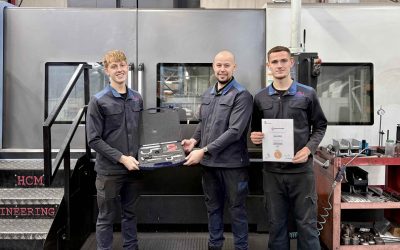
Four Decades of Apprentices: HCM Engineering retains Gold ‘Excellent Employer’ Status
West Midlands toolmaking firm HCM Engineering has retained Gold ‘Excellent Employer’ status in the Next Gen Makers Engineering Apprenticeships: Employer Accreditation, recognising a family business whose commitment to apprentices stretches back more than four decades....

What Makes a Great Apprentice Experience? Four Apprentices Take the Floor
For August's Next Gen Makers online meet-up, we handed the floor to the people who understand apprentice experience best: apprentices themselves. Four members joined us: Hannah Mehr (Arup), Jack Neal (Sertec), Max Bennett (Renishaw) and Teagan Kell (Xtrac), sharing...