
For many sixteen- and seventeen-year-olds, a week of work experience is the first real test of whether engineering is for them. At FESTO UK and Ireland, that week is built deliberately: part realistic working life, part hands-on engineering, part confidence building, with the company’s own apprentices central to delivering it.
At September’s Next Gen Makers online meet-up, Michaela Coxon, Early Careers Manager at FESTO UK and Ireland, explained exactly how the week is structured, and why some of its least popular activities are the ones she refuses to cut.
A week built to feel like the real job
Students, usually Year 12 but occasionally an advanced Year 10, start with an office tour, a health and safety briefing and a laptop of their own, before being introduced to the apprentices who act as their buddy for the week.
Throughout, they are looped into whatever else is happening at FESTO that week, whether that is a staff barbecue or sitting in on apprentice interview days.
“One student was in the room when we debriefed on interview candidates afterwards. His face was priceless. I told him, one day that will be you” says Michaela Coxon, Early Careers Manager, FESTO UK and Ireland.
Why the boring bit stays in the programme
Monday starts with FESTO’s self-paced Online Basics of Pneumatics course, an activity Coxon says is rarely named as anyone’s favourite. She keeps it anyway, because it gives students the grounding they need for the hands-on challenges that follow, and because it reflects a genuine truth about work: not every task is exciting.
Michaela adds: “Work experience should reflect what working life is actually like. A lot of professional development happens through self-directed learning, even the parts that are not very exciting.”
Hands-on challenges, real creativity
From there, the week moves into practical STEM challenges on training boards, gradually increasing in difficulty towards entry-level WorldSkills-style tasks that reward trial, error and problem-solving over textbook knowledge.
Students then move on to CAD, using the professional package Onshape to design, refine and ultimately 3D print a component of their own choosing, taking home a physical object they designed from scratch.
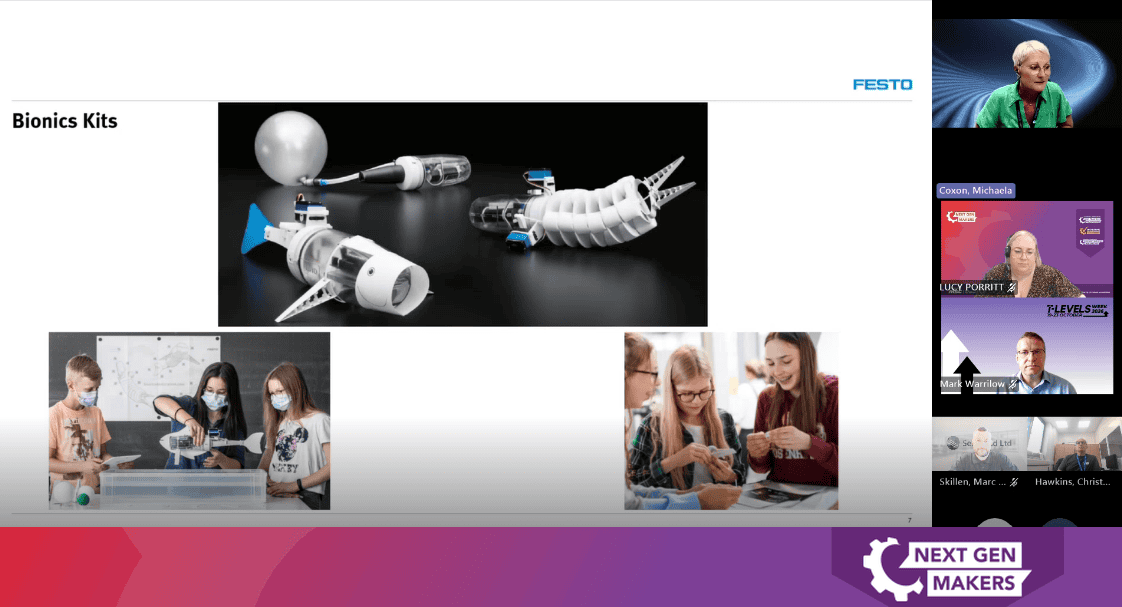
A BBC micro:bit module introduces basic block-based coding, giving students a low-pressure introduction to the software side of modern engineering, while those who finish early can build FESTO’s nature-inspired Bionic kits, including a robotic fish, an elephant’s trunk and a chameleon gripper.
Built-in employability skills
Across the week, FESTO deliberately builds in independent problem-solving, time management and communication, culminating in a Friday presentation where students reflect on what they have learned.
Coxon says the shift in confidence between Monday and Friday is consistent: nervous arrivals leave talking confidently about their week, and several go on to apply for FESTO’s own apprenticeships.
Extending the model
Coxon is now adapting elements of the programme for a different audience. Twelve children with special educational needs and disabilities are due to take part in a two-hour trial in November, developed after a chance meeting through Creating Tomorrow’s Trust.
Materials have been redesigned to rely more on pictures than text, alongside an explainer video of the building to help reduce anxiety before students arrive.
“Our aim is to inspire the next generation of engineers, technicians and innovators by giving them an experience that is engaging, realistic and memorable” reflects Michaela.
Frequently Asked Questions
What should a good work experience week include?
A good week combines structured, hands-on technical activities with genuine employability skills, such as problem-solving, communication and independent working, alongside direct access to the people already doing the job, such as current apprentices.
Should work experience always be exciting?
Not necessarily. Including some less glamorous, self-directed learning gives students a more honest picture of working life, and often helps them engage faster with the practical activities that follow.
Where to start
FESTO’s approach shows that a strong work experience programme does not need a large team to deliver it, just a structured plan, genuine hands-on tasks, and apprentices involved in the delivery.
Sessions like this happen every month inside the Engineering Apprenticeships: Best Practice Programme. Find out more about joining.